
Hemodialysis, while a life-sustaining necessity for patients with kidney failure, is highly resource-intensive, consuming up to 500 liters of water per treatment and requiring considerable energy for water purification and treatment delivery.
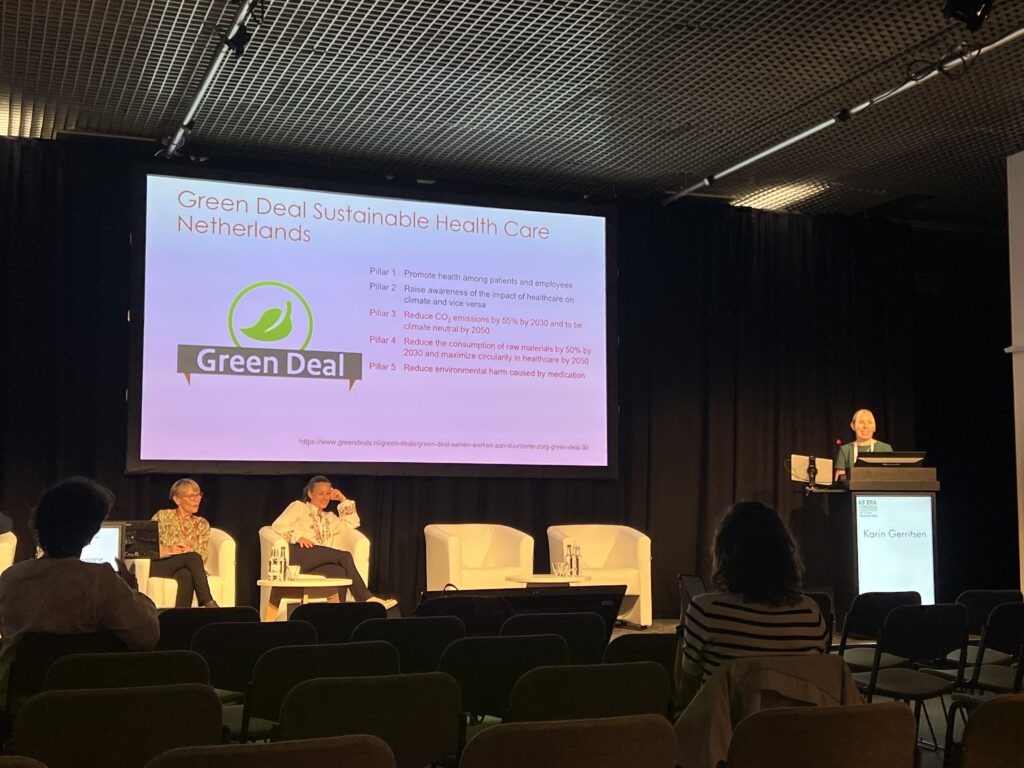
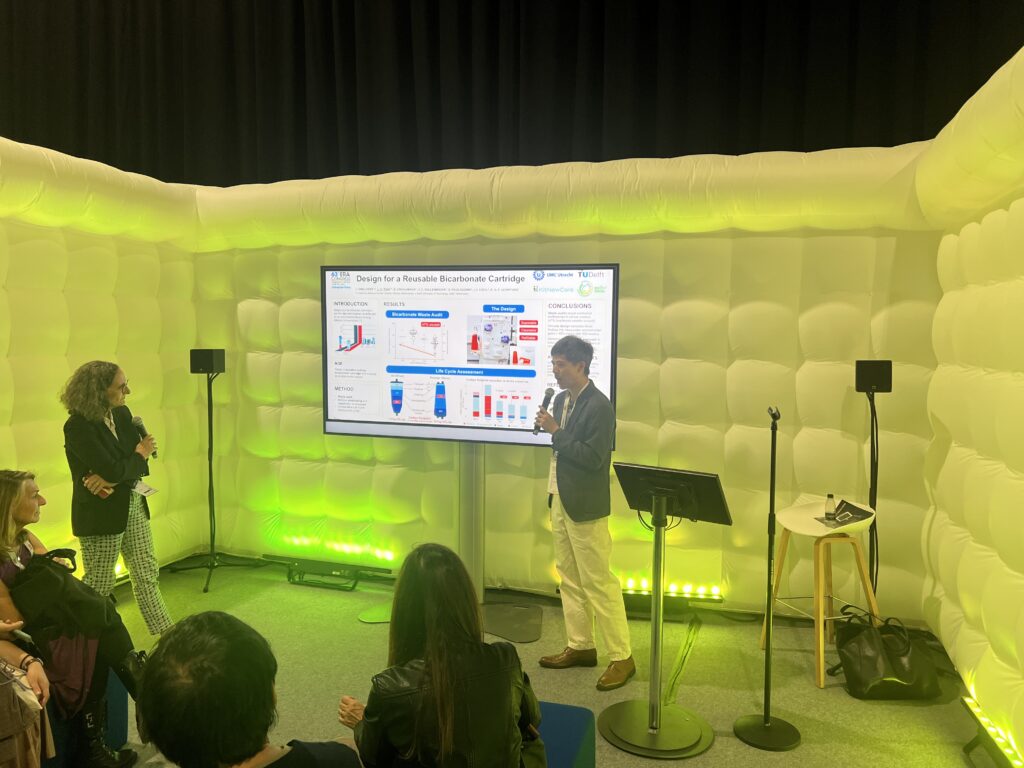
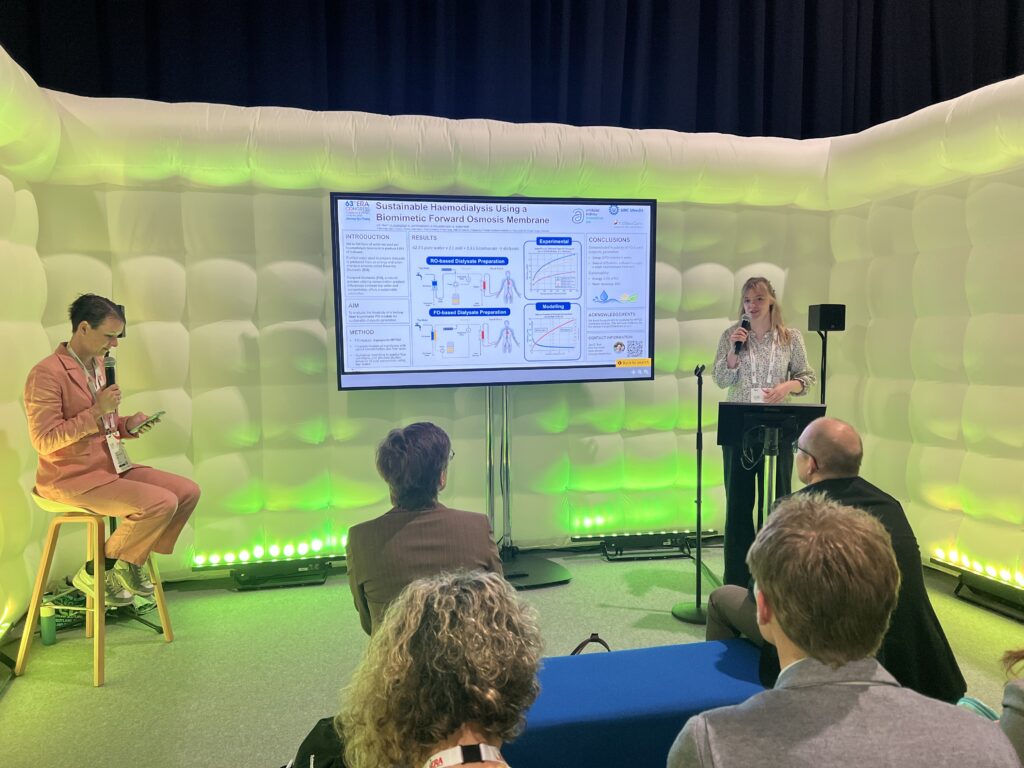
At the 63rd European Renal Association (ERA) Congress in Glasgow, green nephrology took center stage. A team from UMC Utrecht contributed across multiple sessions: ESCH-R PhD candidate Jan Tsai, together with master’s student Elvira Scholten, presented in the Focused Orals session, showcasing work on circular design and sustainable dialysate production. In addition, Associate Prof. Karin Gerritsen of UMCU presented in the Sustainable Nephrology Committee Workshop, highlighting “Innovations in Green Dialysis.”
The BiCare Cartridge: Eliminating the 47% Waste Problem
Single-use bicarbonate cartridges are currently the second-largest contributor to environmental impact among all dialysis consumables. A clinical waste audit at UMC Utrecht revealed a major systemic inefficiency: on average, 47% of the sodium bicarbonate powder remains unused and is discarded after treatment.
BiCare is a circular redesign of the bicarbonate cartridge, making it separable, cleanable, and refillable. A Life Cycle Assessment (LCA) showed that even with limited reuse over a few weeks, carbon emissions can be reduced by 33%, while extensive reuse leads to a 48% reduction per treatment compared with conventional single-use cartridges.
Forward Osmosis: A 96.5% Energy Drop
Water purification in dialysis has long relied on Reverse Osmosis (RO), an energy-intensive process that uses high-pressure pumps to produce ultrapure water.
A biomimetic Forward Osmosis (FO) system using Aquaporin HFFO2 membrane technology was evaluated as a more sustainable alternative. Model results show the system can produce 670 mL/min, sufficient for a single continuous hemodialysis treatment, while using 96.5% less electricity than conventional RO systems and achieving 90% water recovery.
Thanks to all contributors and collaborators: Josje Smulders, Guus Crooijmans, Jeroen Vollenbroek, Jan-Carel Diehl.


