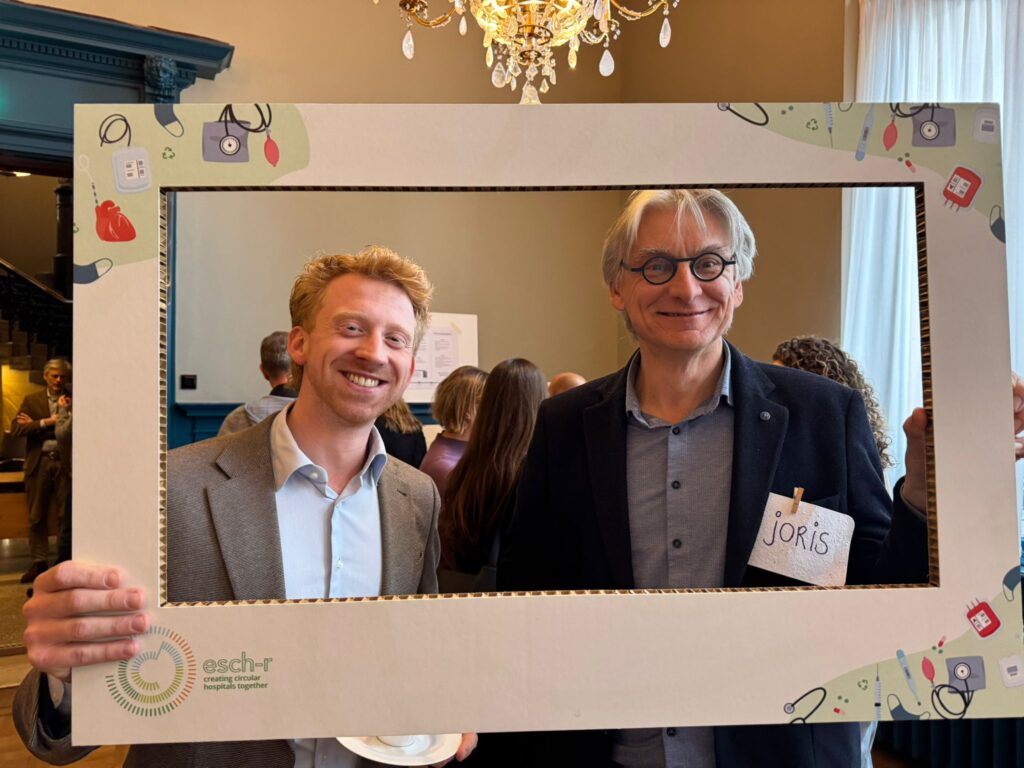
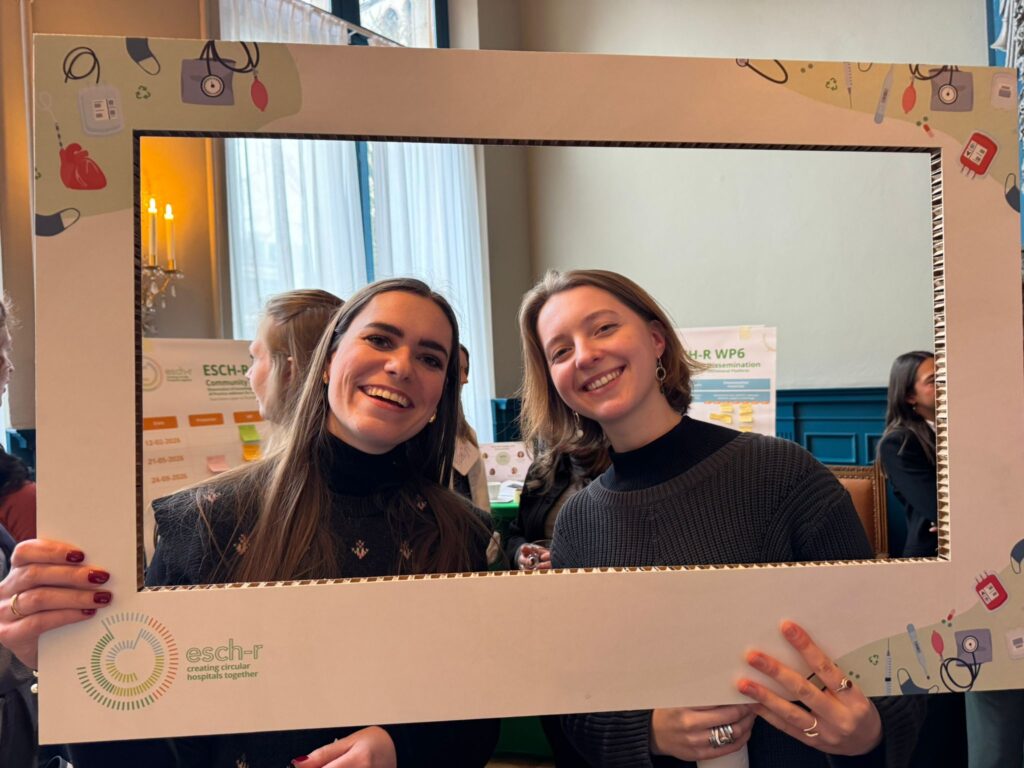
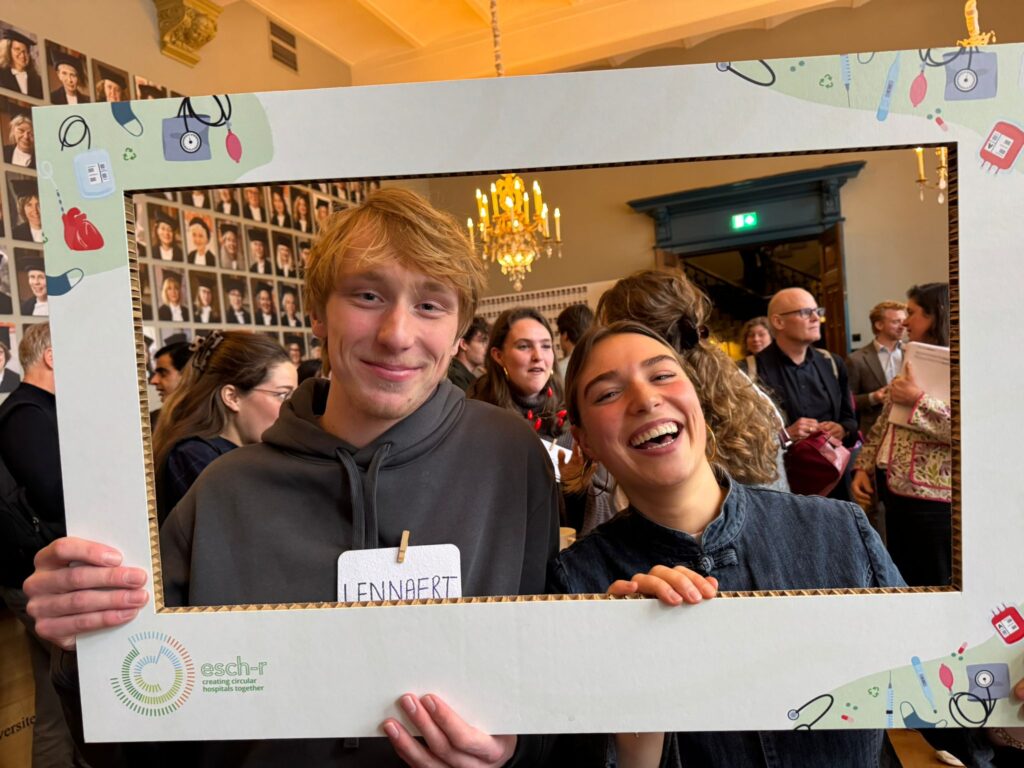
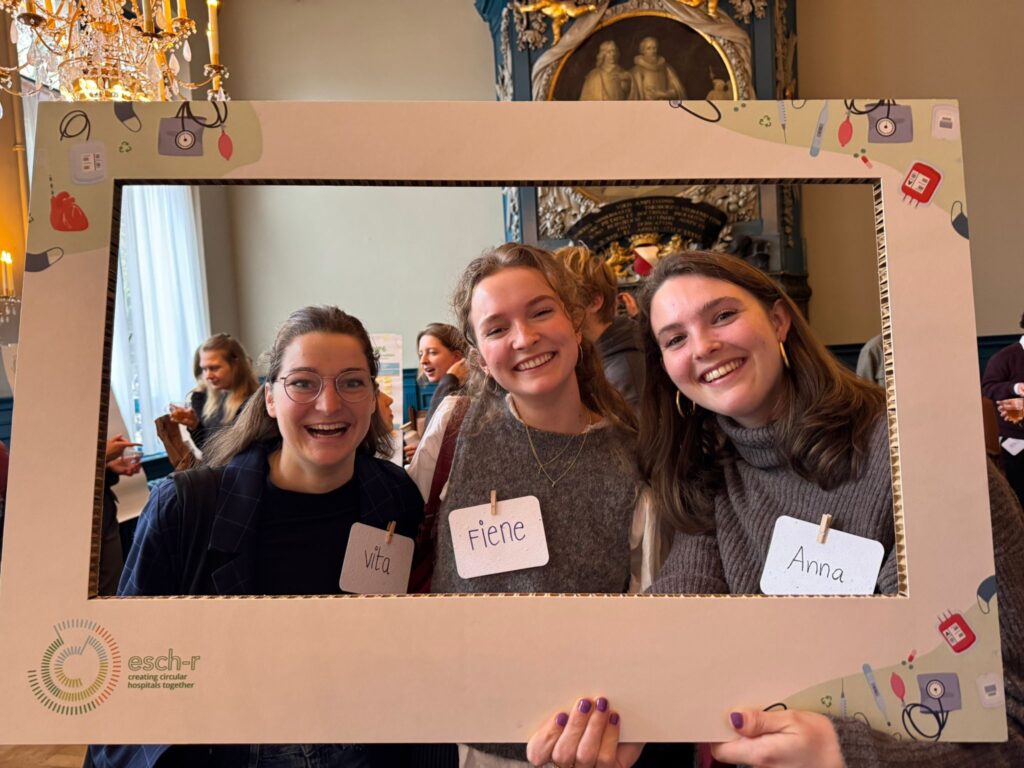
Last Friday, we gathered in the Utrecht University Hall in Utrecht for the ESCH-R Science Meeting! A day that captured both the urgency and the possibility of circular transformation in healthcare.
We opened the science programme with a powerful keynote by Prof. Dr. Derk Loorbach (Director DRIFT Erasmus University). His central question “Why do we know so much, yet change so little?” resonated deeply with the healthcare context. The gap between knowledge and action, the waste-resource paradox, and the need for true systemic change set the tone for the rest of the day.
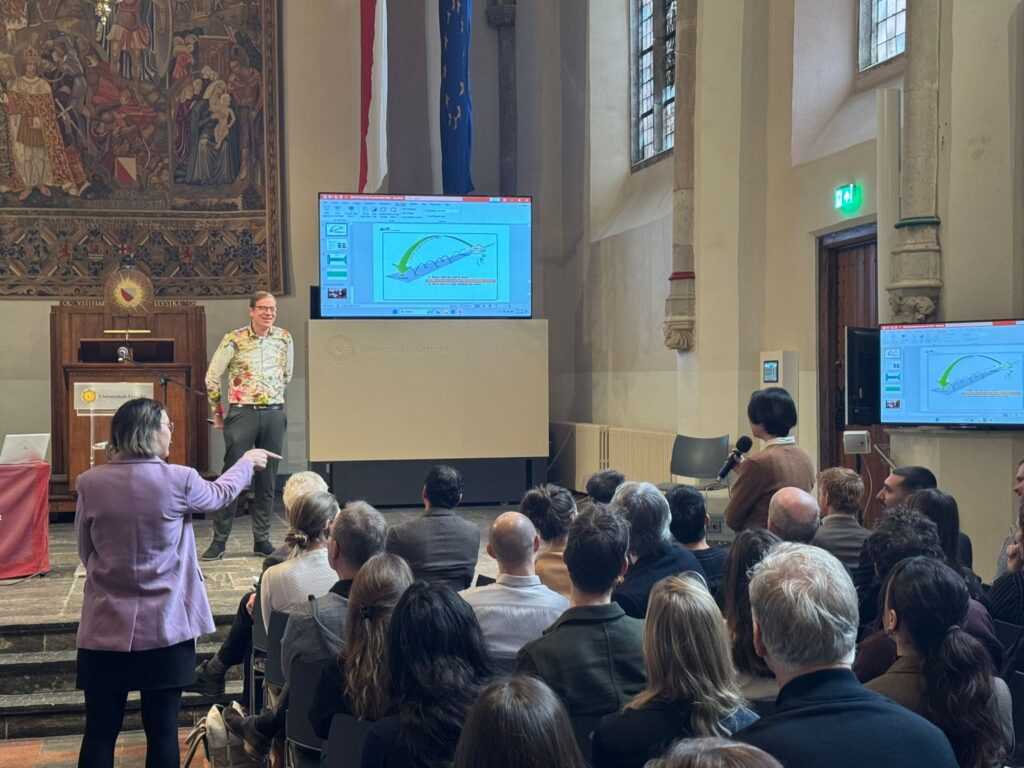
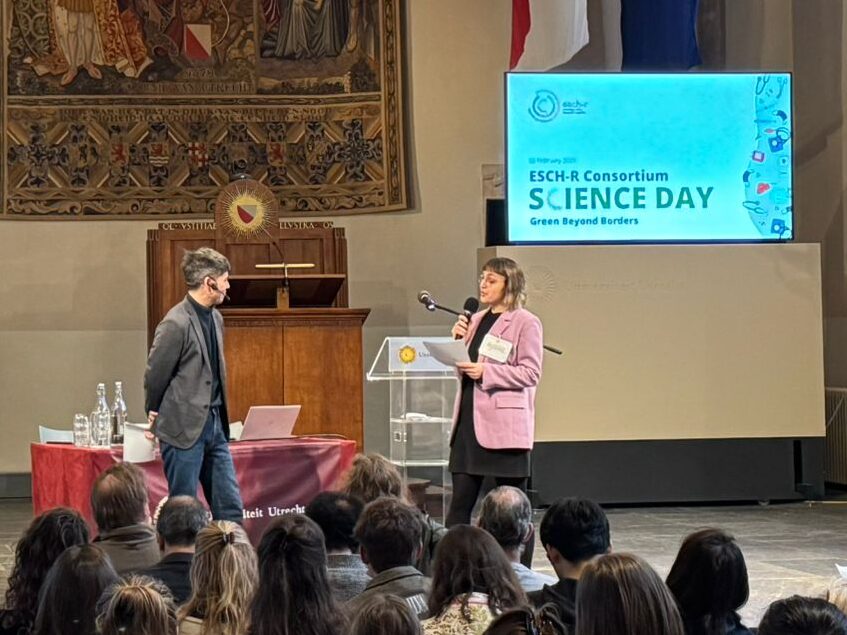
The science meeting was expertly moderated by ESCH-R Postdoc Ayşegül Özçelik and ESCH-R PhD Jan Tsai, who guided us in a structured and humorous way through a programme that balanced theory, real-world practice and open reflection.
Case 1: Infusion bags – design, materials and circular choices.
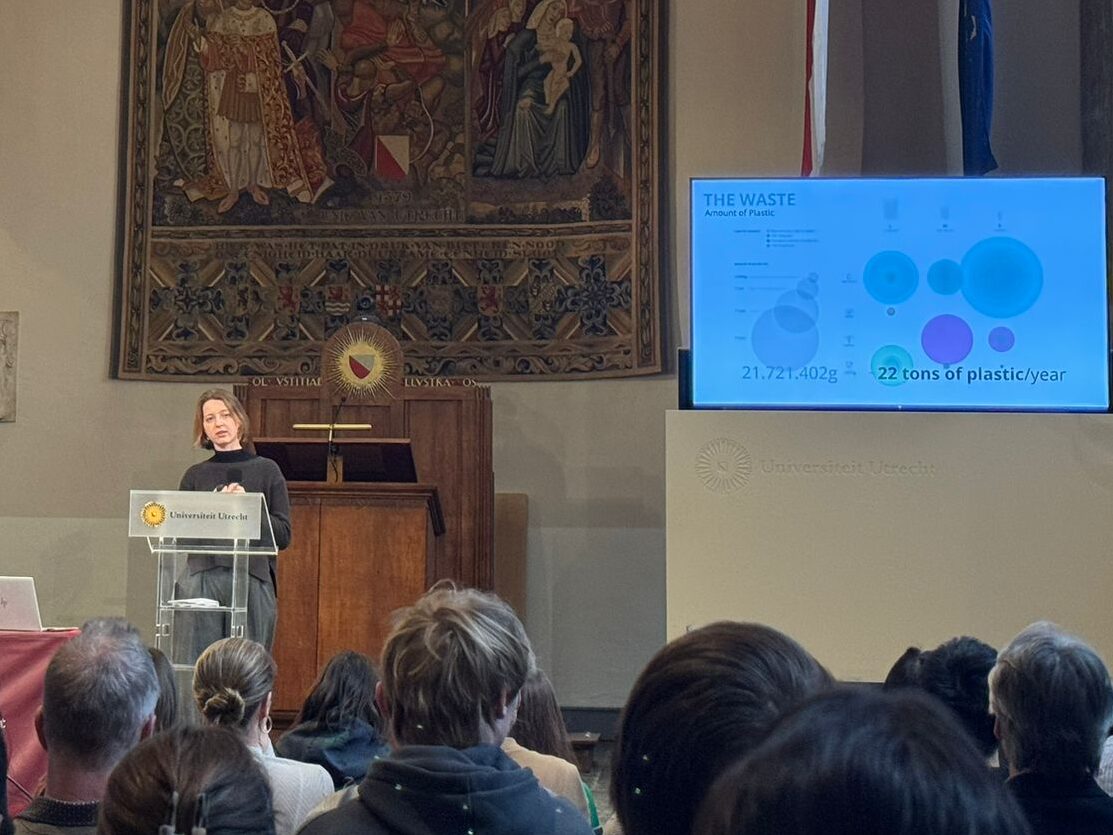
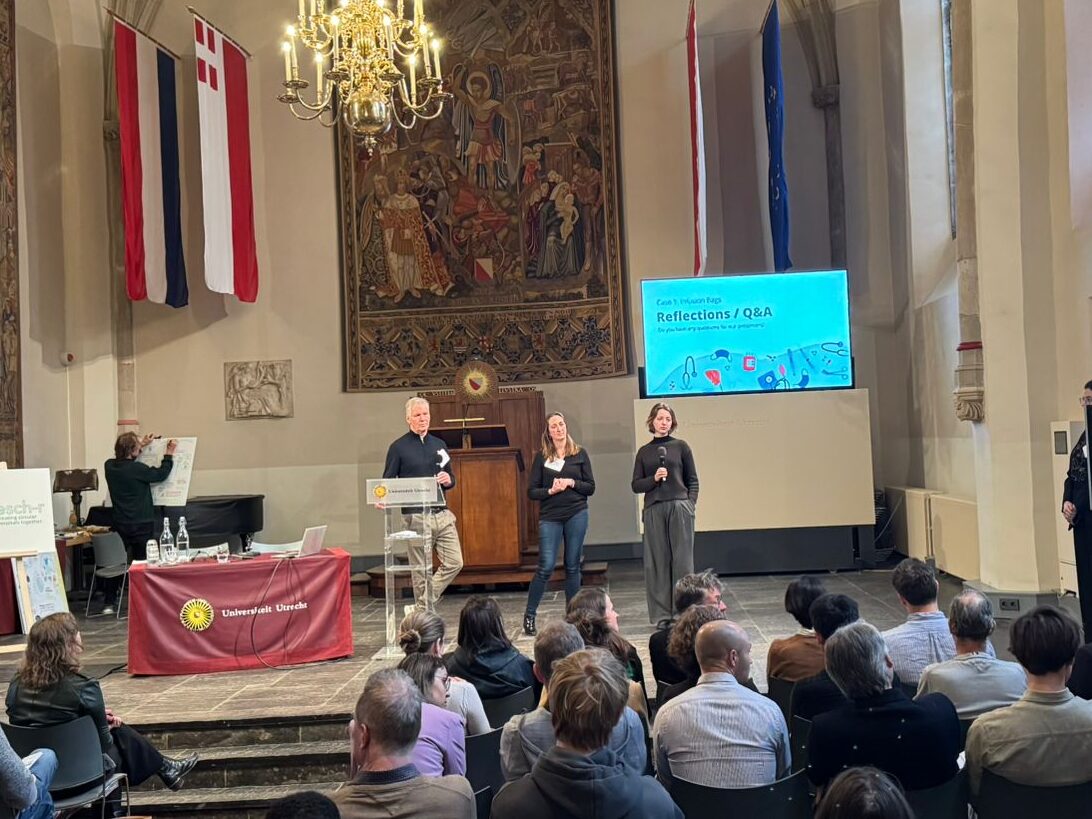
This case was presented by Han Buck, who showed how something as seemingly ordinary as an infusion bag can become a powerful leverage point for circularity. At Erasmus MC, around 1 million infusion bags are used each year, resulting in 22 tonnes of plastic waste annually.
Starting from the principles of refuse, reduce and recycle, Han demonstrated how a design-led exploration, in close collaboration with nurses, focused on ergonomics, safety and feasibility in daily clinical practice. The result: a redesigned infusion bag concept (“Ivy”) that reduces material use without increasing the workload for healthcare staff.
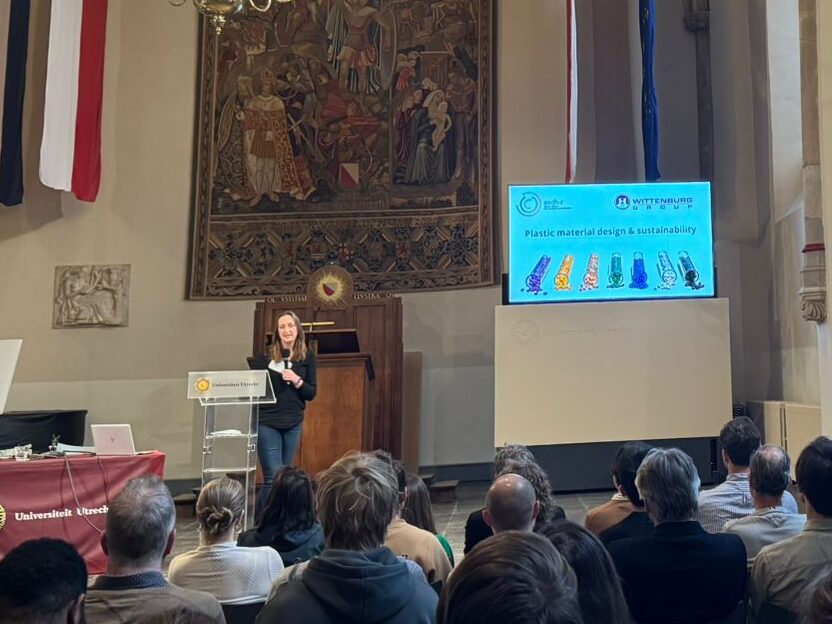
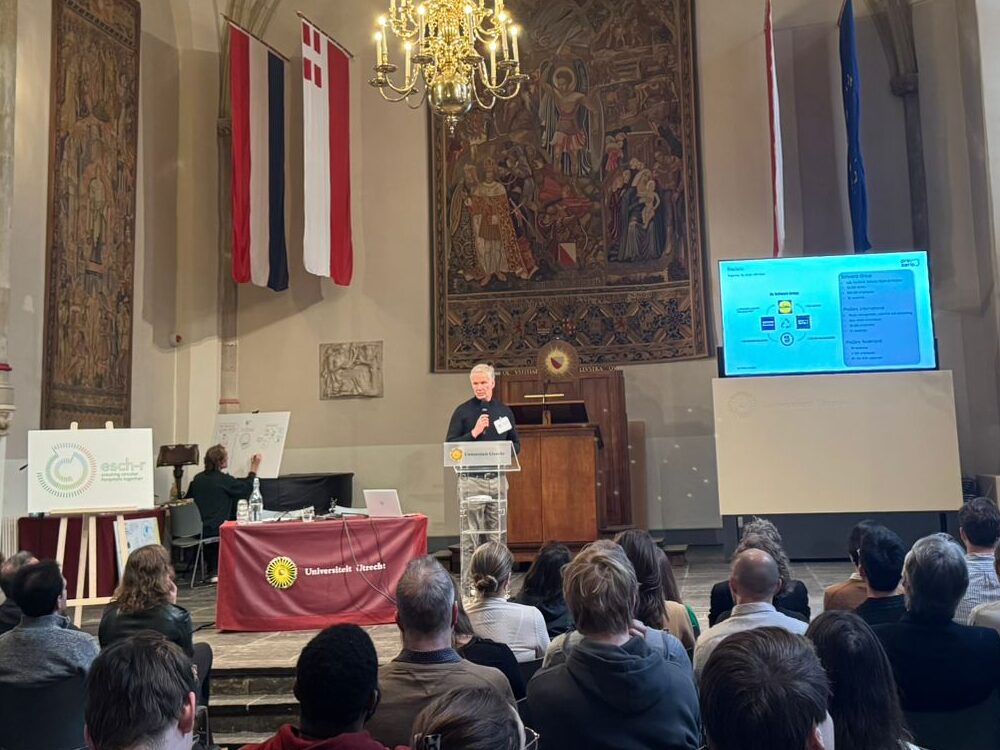
Anne Traa (Director at Wittenburg, one of the ESCH-R consortium partners) complemented this perspective from the materials and manufacturing side, explaining how polymer choice, regulatory constraints and patient safety are inseparable. Circularity, she stressed, starts with material decisions at the very beginning of the design process and always with patient safety as the non-negotiable baseline.
From the waste management perspective, Arthur Haag (Sectormanager Cure, Care & Education at PreZero, also a partner of the ESCH-R consortium) placed the case in a broader system context. While many hospital waste streams can already be recycled, around 35% still cannot. Products that are not designed for circularity inevitably end up being incinerated. The infusion bag case clearly illustrated how upstream design choices directly enable downstream recycling.
Case 2: Analysis of the material footprint of TAVI (Transcatheter Aortic Valve Implantation)
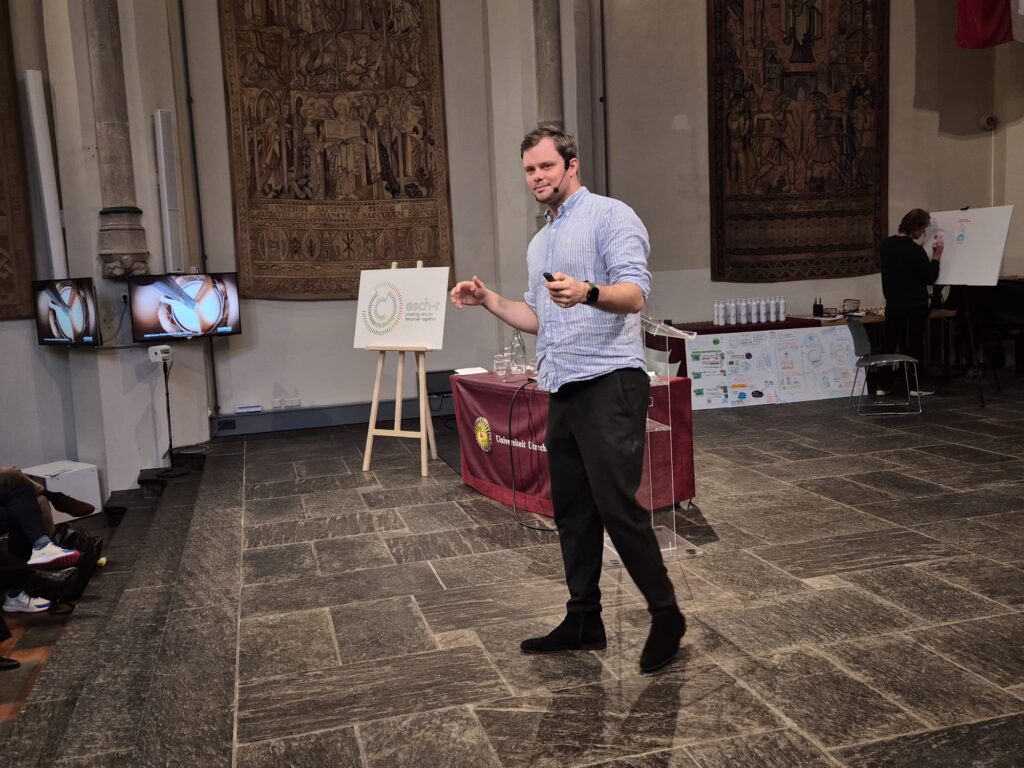
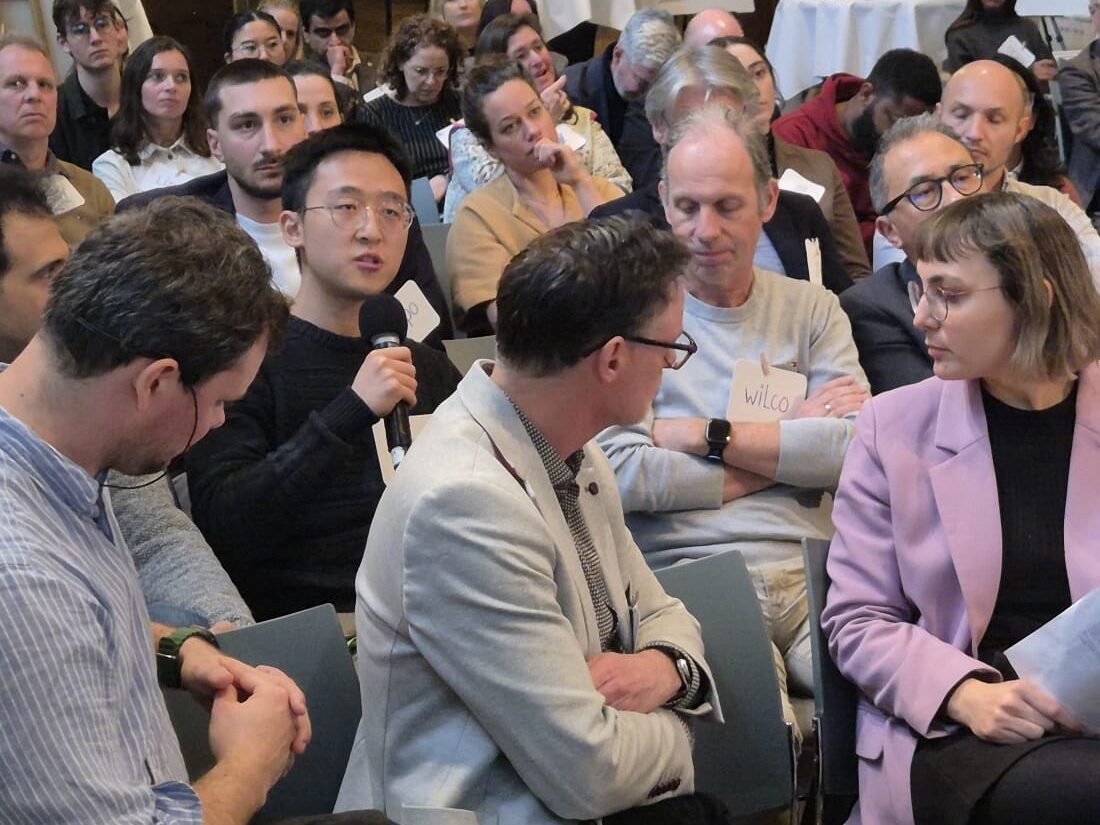
In the second case, our PhD Jasper Klasen presented an analysis of the material footprint of TAVI (Transcatheter Aortic Valve Implantation) procedures. While TAVI significantly reduces carbon emissions compared to open-heart surgery, the material impact remains substantial: 13.6 kg of waste per procedure, involving a large number of single-use products.
Using circular strategy frameworks, the audience explored where in the care pathway the most meaningful interventions could be made. Four phases were discussed in an interactive reflection:
- Unboxing
- Preparation
- Use
- Disposal and incineration
This led to a broader discussion not only about redesign and waste reduction, but also about more fundamental questions: Do we always need these procedures, and at what moment in the system do we create the most leverage for change?
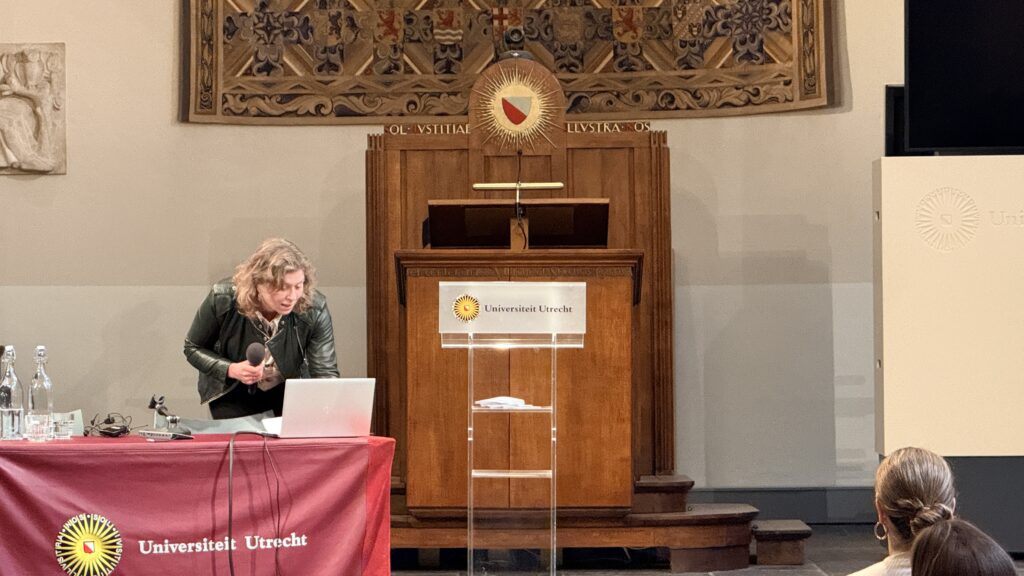
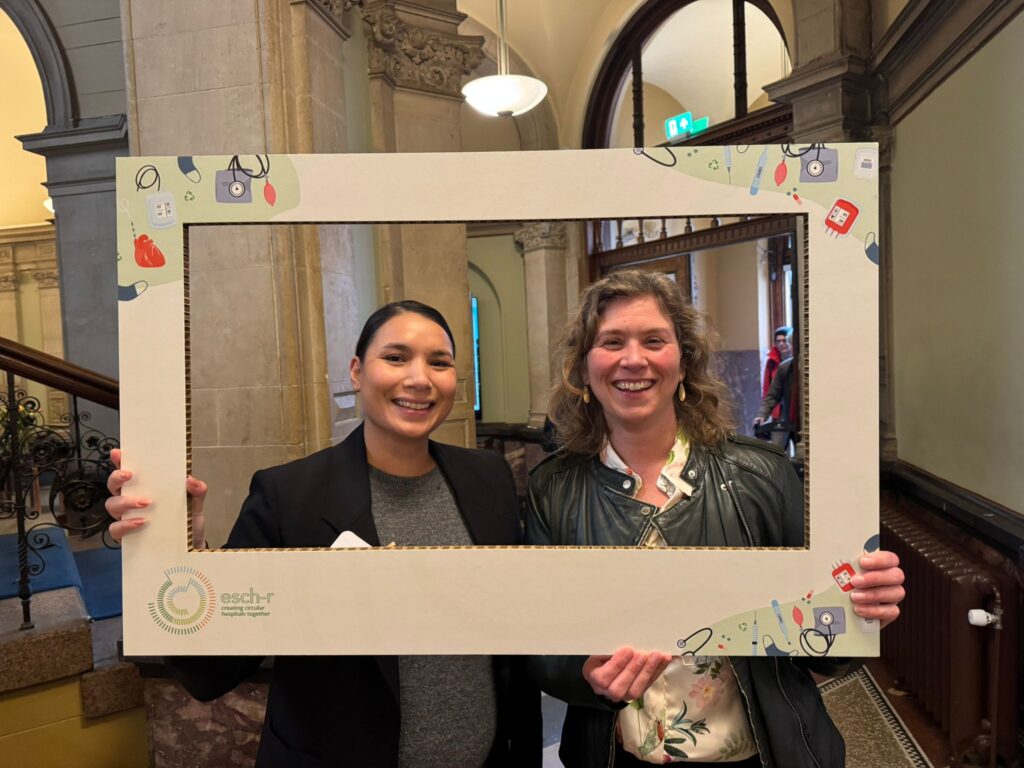
In her closing remarks, Nicole Hunfeld, Principal Investigator of ESCH-R, offered a clear outlook on the year ahead. She reflected on the strong progress made so far and emphasised the importance of the coming phase: deepening collaboration across work packages, strengthening visibility through publications, podcasts and other communication formats, and continuing to invest in the people behind the research.
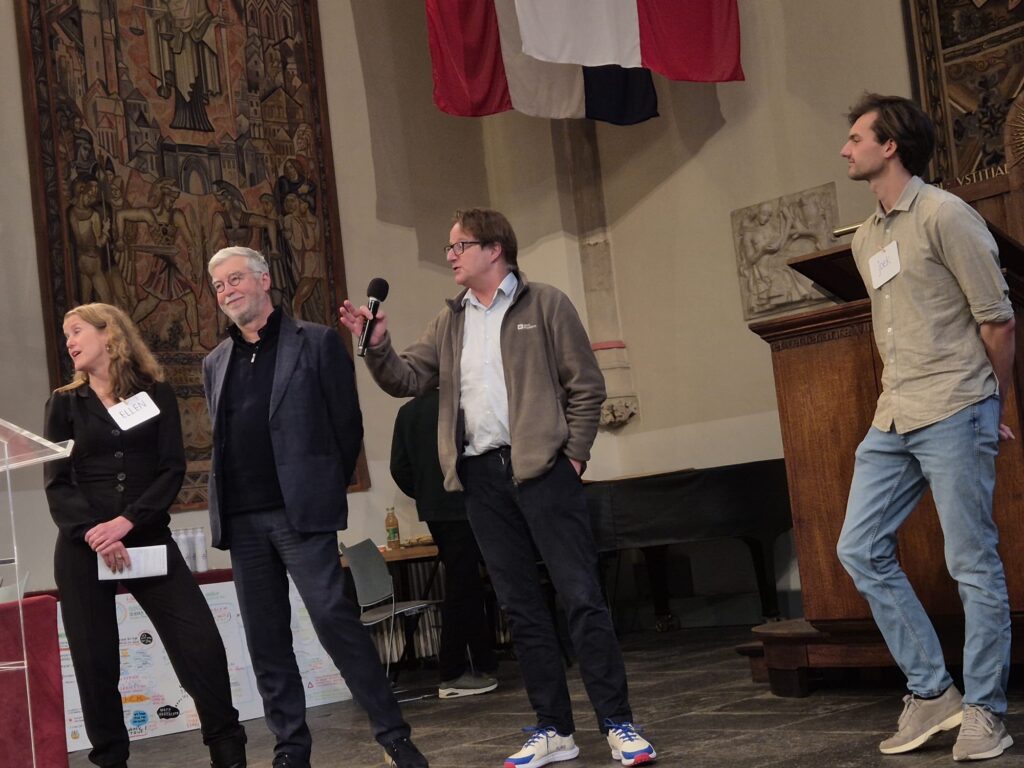
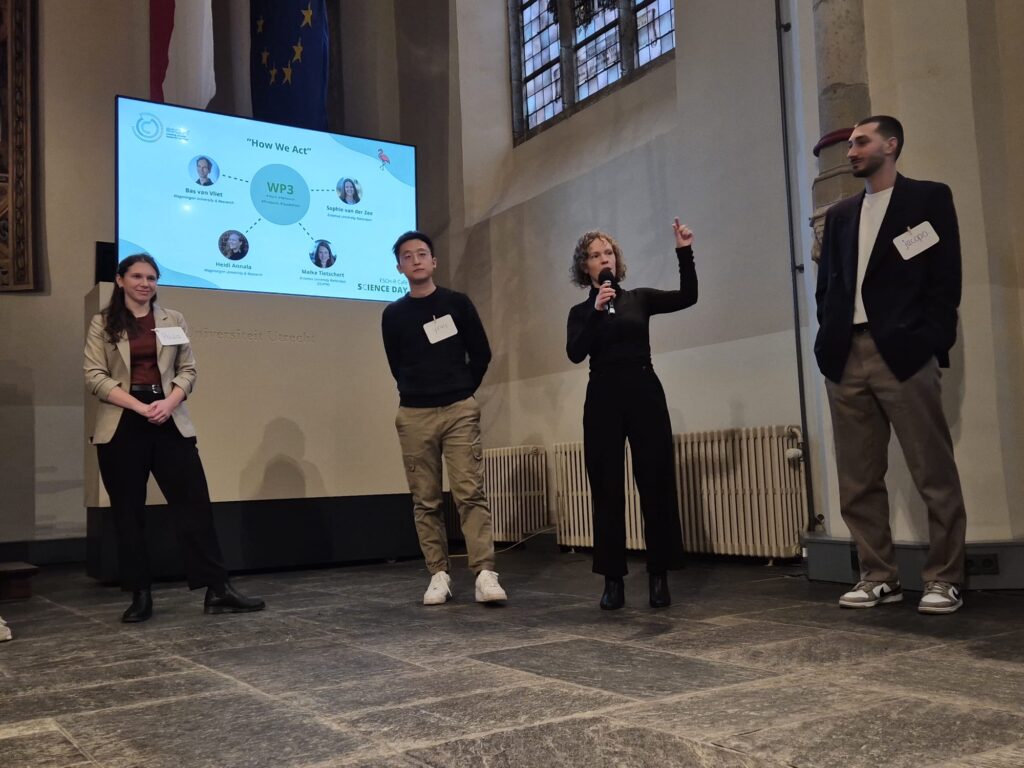
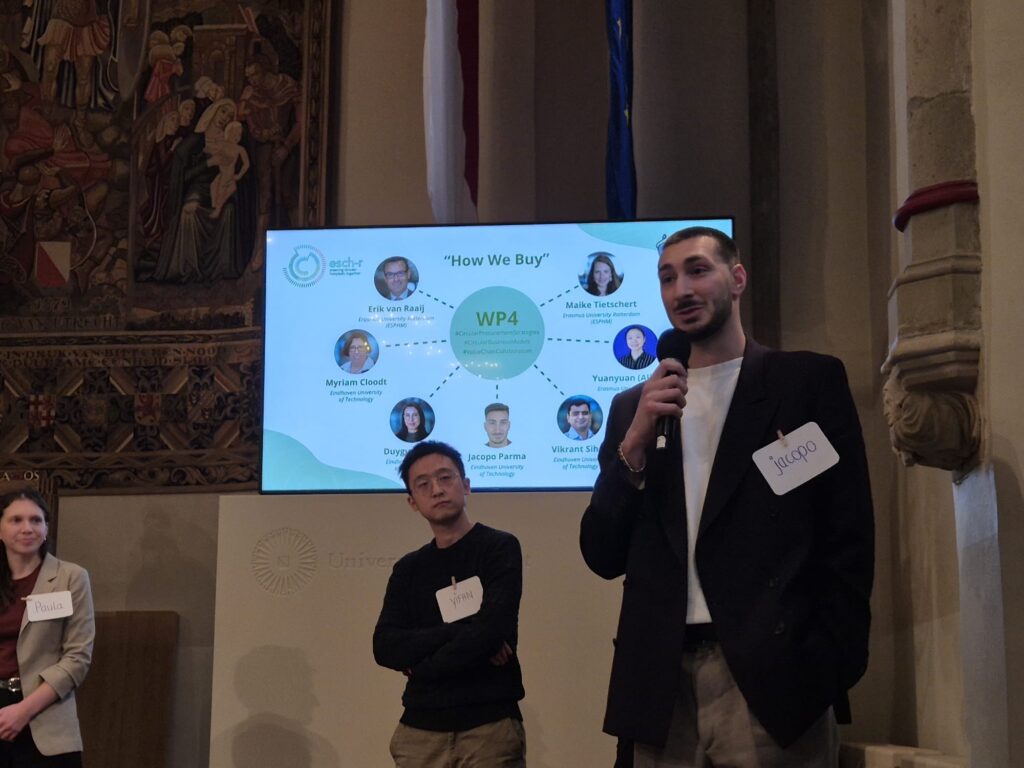
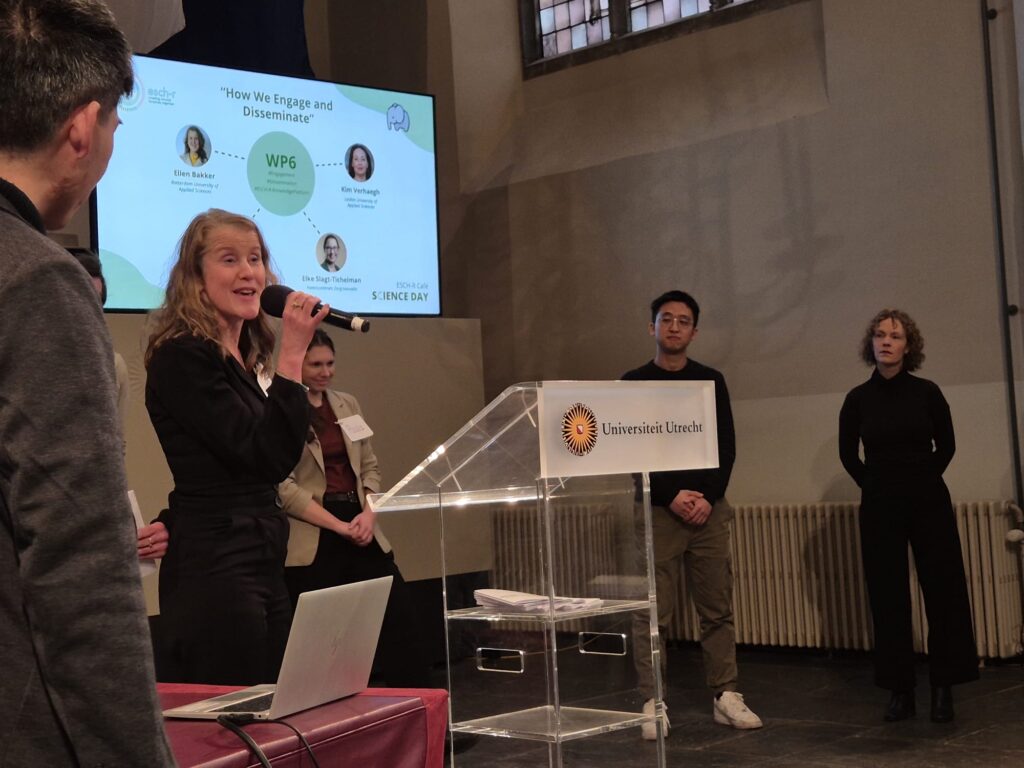
The day concluded with an interactive ESCH-R Café, creating space for personal conversations and connection. Participants had the opportunity to meet the ESCH-R PhD candidates, work package leads and representatives from the living labs, turning the day’s insights into new relationships and concrete next steps!