
Published in: DRS Design Research Society
Authors: Ayşegül Özçelik, Jotte de Koning, Nicole Hunfeld, Jan-Carel Diehl
Steering sustainability transitions in complex organizations, such as hospitals, may benefit from iterative, situated, and participatory experimentation. Co-creation holds particular promise in this regard, acting as a “pebble” in the system that generates ripple effects towards sustainable change. However, its implications and methodologies within hospital systems, especially those grounded in design practice, remain underexplored. This paper investigates designerly co-creation through seven medical device design projects conducted by master’s students in collaboration with healthcare professionals. Drawing on observations of co-creation processes and 14 interviews, the study identifies designerly co-creation as both an “incubation space” for sustainability innovations and a potential “catalyst for change” in staff behaviors, mindsets, competencies, and hospital procedures. The paper contributes to the growing body of knowledge on design for sustainability transitions by highlighting the evolving role of co-creation in steering change and generating impact within hospital contexts.
Science in 3 – Three important insights from this research!
Science in 1 – Co-creation is not just about generating ideas, it builds capabilities, strengthens connections, and creates space for change.
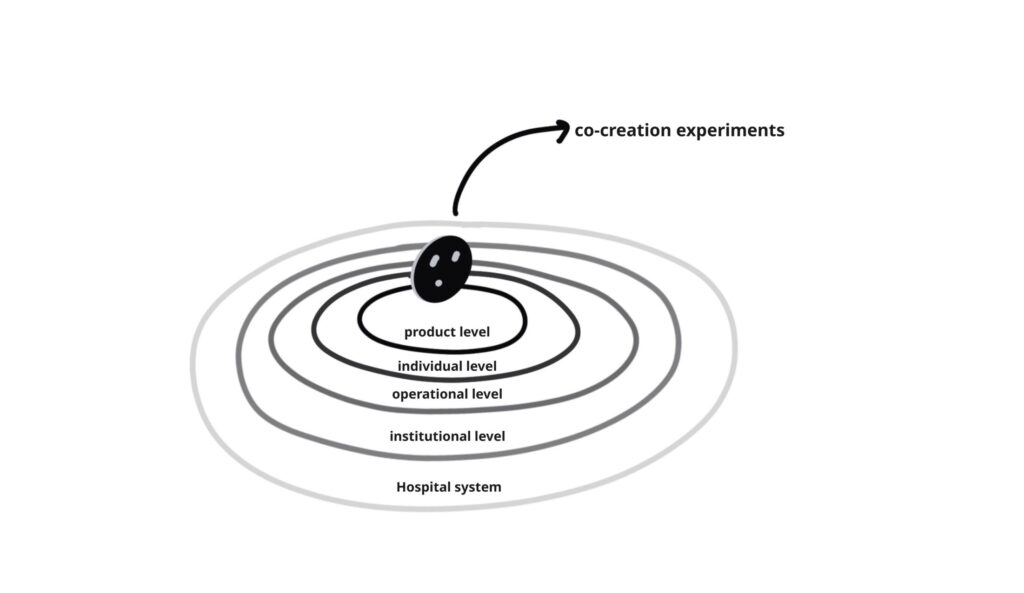
Science in 2 – Co-creation creates a safe to fail space to experiment with sustainability innovations within the realities of healthcare.
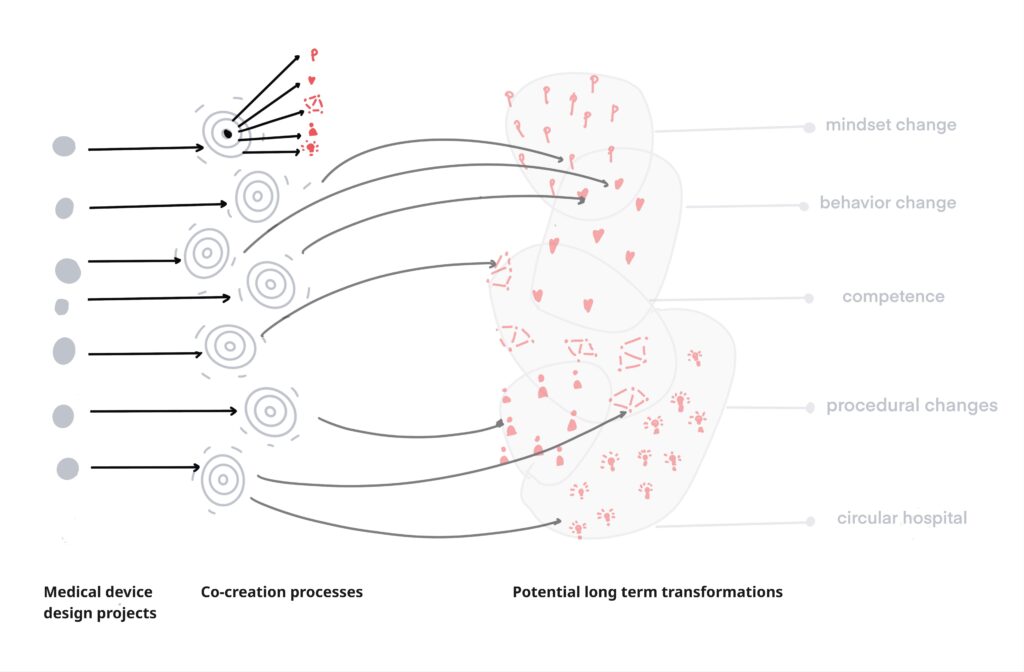
Science in 3 – The most powerful outcome of co-creation is not the solution itself, but the ripple effect it could create: shifting mindsets, behaviours, and collaboration in ways that can drive lasting change.
This research is part of the ESCH-R project (esch-r.org), which aims to accelerate the adoption of circular interventions in hospitals.


