
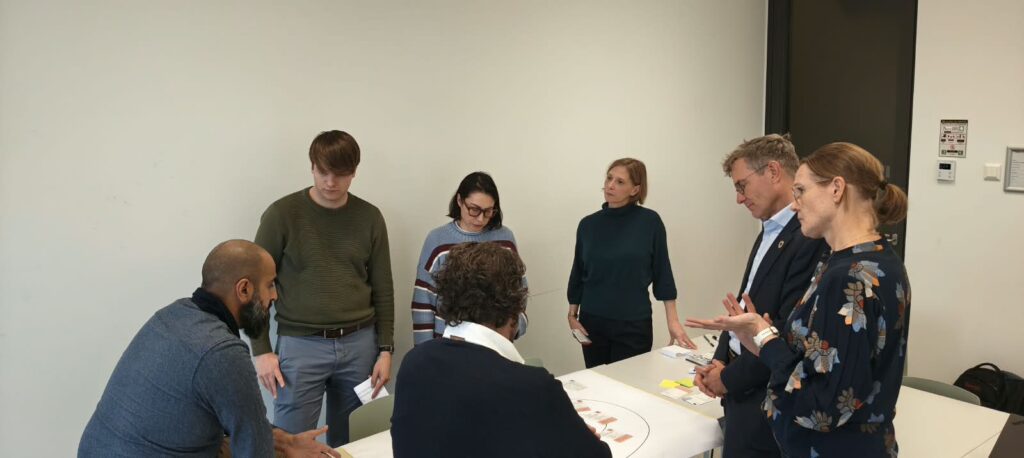
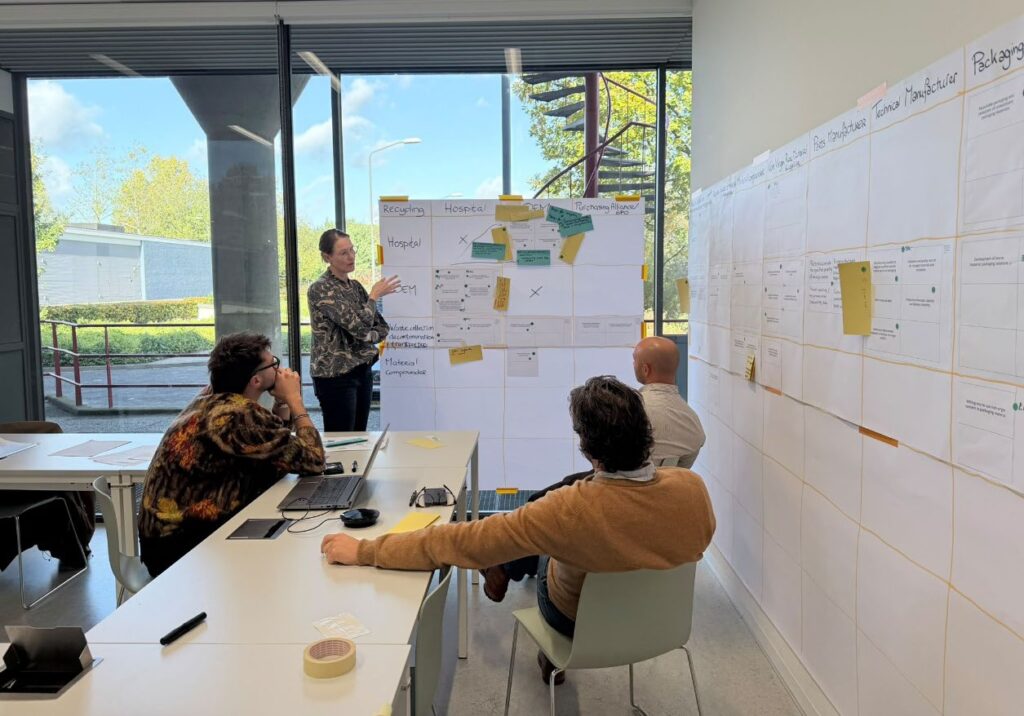
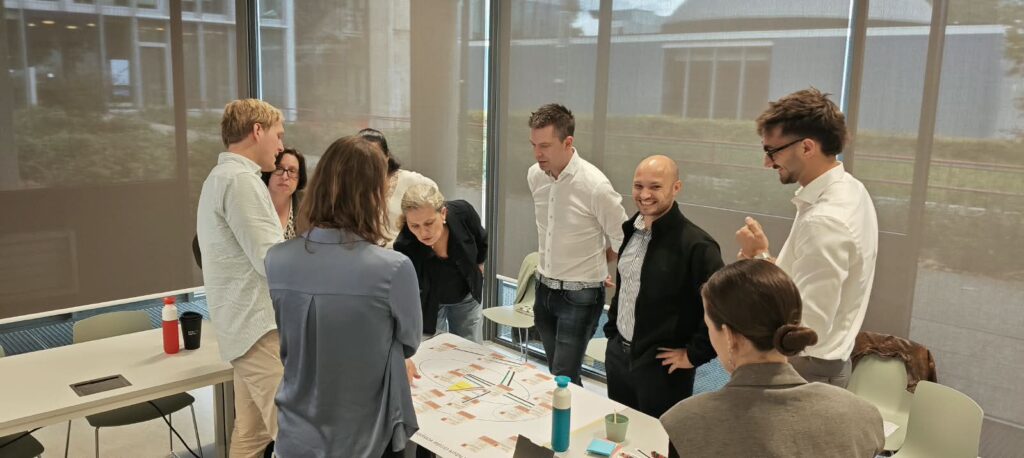
On 27 and 28 October, the ESCH-R Work Package 4 (WP4) team gathered at the Neuron building at Eindhoven University of Technology (TU/e) for its fifth co-creation session. Over two days, participants from hospitals, industry and academia explored how circular value chains in healthcare can become viable in practice, focusing on circular business models, procurement strategies, collaboration across the value chain and the KPIs needed to support implementation.
Moving towards circular healthcare requires both commercially and operationally viable business models and procurement strategies that create demand, align incentives and encourage collaboration. The two-day session brought these perspectives together, translating circular ambitions into concrete directions for further development and collaborative action.
Day 1: Exploring circular business models
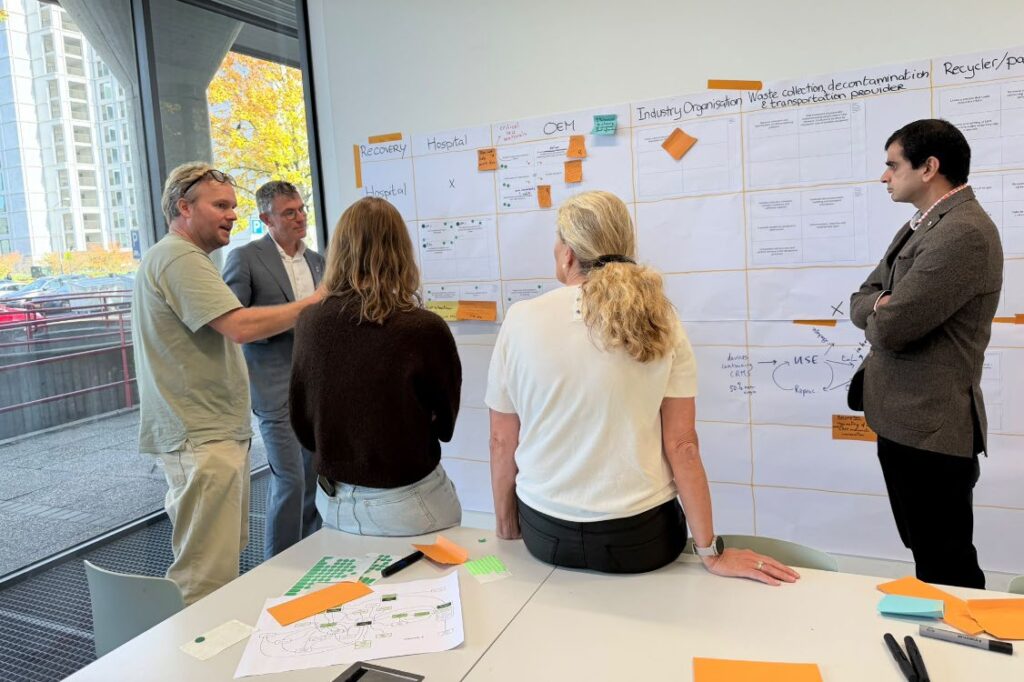
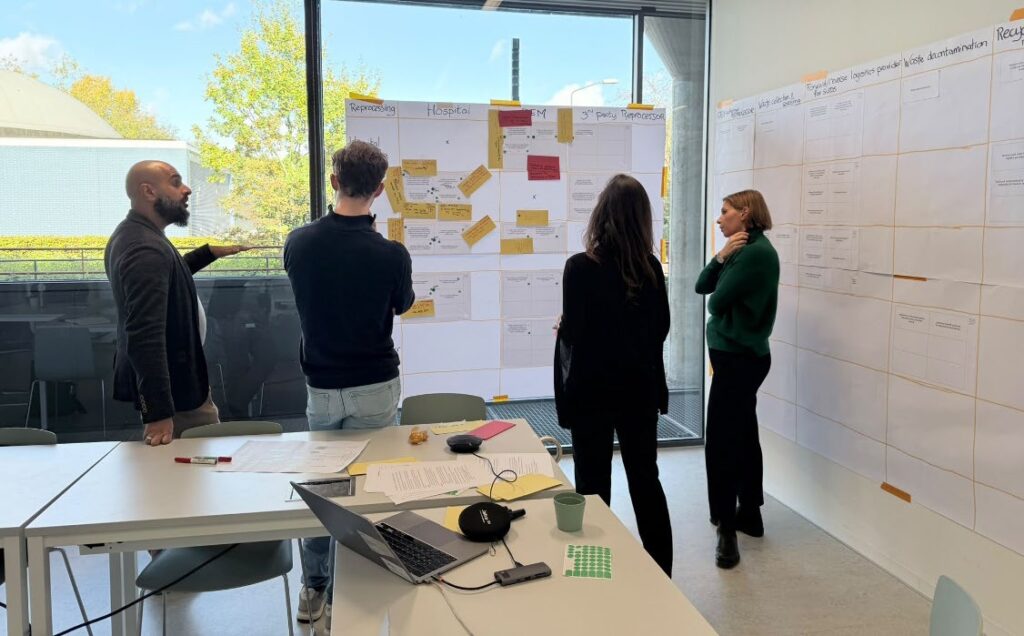
The first day focused on developing and discussing future circular ecosystem configurations and business model directions for two cases. Participants explored the roles of different actors, value flows and interdependencies required to retain product and material value across multiple use cycles.
A key insight was that circular business models cannot be developed or implemented by individual organisations alone. Successful implementation requires coordination between hospitals, original equipment manufacturers (OEMs), reprocessors, logistics providers and other value-chain partners. Aligning their roles, responsibilities and interdependencies is essential.
Participants also emphasised the importance of a shared value proposition and aligned incentives. For circular business models to scale, hospitals, OEMs and service partners need to recognise clear operational, financial and environmental benefits. Appropriate coordination and value-sharing arrangements are therefore crucial to making circular solutions viable for all actors involved.
Day 2: Advancing circular procurement strategies, networks and KPIs
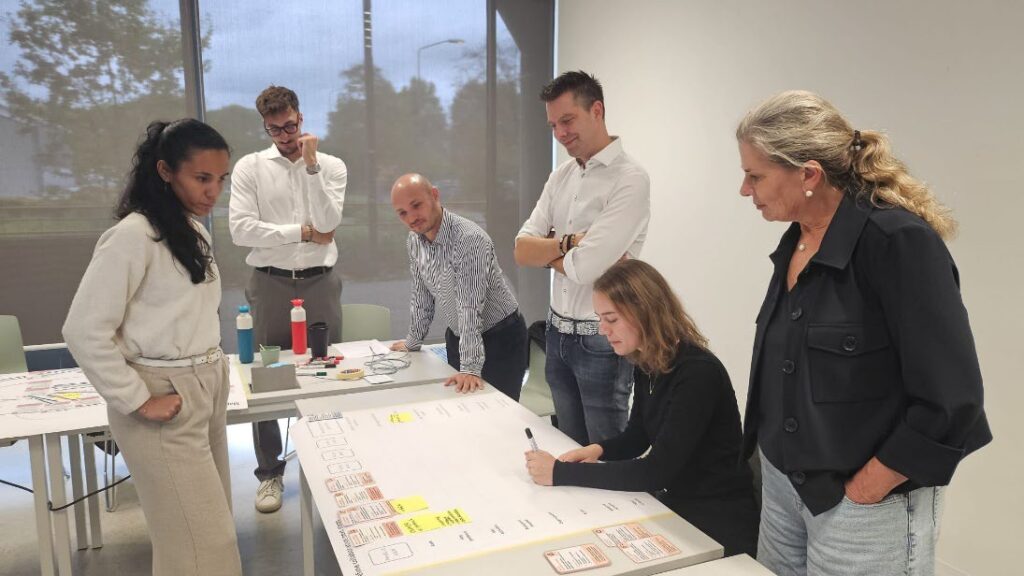
The second day shifted the focus towards circular procurement and the network conditions needed to support its implementation. Participants identified dependencies and developed an initial set of key performance indicators (KPIs) for three circular scenarios: reprocessing of single-use devices, recycling of plastics and recovery of critical raw materials.
Discussions highlighted the strategic role of procurement in accelerating circular healthcare. By incorporating circularity into tender criteria and supplier engagement, procurement can help shift the focus from purchase price towards lifecycle value. This includes considerations such as reprocessability, recyclability, material transparency, traceability and total cost of ownership.
Another important outcome was the need for KPIs that work across the entire value chain. The indicators proposed during the session provide an initial basis for a shared performance framework, rather than a final KPI set. They cover aspects such as recycled content, recyclability, use-cycle data, traceability, material and critical raw material information, end-of-life collection, and compliance with sorting and transport requirements.
The discussions also underlined the importance of a clearer demand signal from hospitals. Through coordinated procurement and closer collaboration, hospitals can provide greater market certainty for manufacturers and other supply-chain actors, helping to create the conditions needed for circular solutions to develop and scale.
From insights to action: Next steps
Building on the outcomes of the two-day session, the WP4 team identified several next steps to further develop circular business models and procurement strategies.
Further developing circular business models
The next phase will focus on consolidating the ecosystem maps, initial circular business model blueprints and key assumptions developed during the workshop. This will help establish a shared understanding of the proposed ecosystem configurations.
Participants will then jointly refine circular value propositions and explore how complementary business model elements could be combined into hybrid configurations. The aim is to identify solutions that enable circular outcomes while creating shared value for the different actors involved.
Another priority is to identify suitable products, settings and testing approaches to validate the main technical, operational and economic assumptions. This includes distinguishing between assumptions that can be explored through further discussion or analysis and those that require practical testing.
Finally, the partners will work towards agreeing on roles, responsibilities and contributions for developing and implementing selected pilots. These agreements will be translated into a coordinated action plan with a clear scope, milestones, expected outcomes and evaluation criteria.
Strengthening circular procurement strategies
For circular procurement, the next steps will focus on developing a shared understanding, building practical knowledge and strengthening collaboration across the value chain.
One of the first actions will be to develop a common terminology dictionary, clarifying terms such as single-use, multiple-use, reuse and reprocessing.
The team will also explore whether the three circular scenarios can be used to develop practical examples for decision-makers, helping to increase awareness of circular opportunities.
In addition, a series of roundtable discussions will be organised to explore specific topics in greater depth, including regulation and collaboration between OEMs and other value-chain partners.
Practice-oriented student research projects will also contribute to this work. An initial project will examine current recovery processes for critical raw materials, their effectiveness and existing recovery volumes. Similar projects will be developed for recycling and reprocessing. For recycling, this will include jointly identifying the most promising products for recycling.
Looking ahead: The next co-creation phase
The WP4 team will discuss a possible agenda for an online meeting and propose a date in 2027.
Future co-creation sessions on circular business models will focus on clarifying assumptions and validating business models. For circular procurement strategies, the emphasis will be on validating KPIs and designing tendering approaches for circular network procurement.
Together, these next steps will help translate the insights from the fifth co-creation session into further collaboration, practical validation and concrete approaches to advancing circular healthcare.


